Project approach

Four quality gates. One chain of evidence.

Inspection works best when findings connect across the project lifecycle. A material traceability gap during production should be visible at release. A shipment defect should be traceable back to process history. Corrective action should close the cause, not just the symptom.

The through-line

Every gate feeds the next one.

We do not treat audits, inspections, and corrective actions as isolated events. Each gate produces evidence that informs the intensity and focus of the gate that follows, so risk is compounded downward, not rediscovered late.

Build an inspection plan
1

Qualify

Assess supplier capability, QMS controls, factory readiness, certifications, equipment, staffing, and risk before production begins.

2

Control

Monitor incoming materials, process parameters, workmanship, in-process testing, traceability, and nonconformance handling.

3

Release

Apply agreed sampling and acceptance criteria before shipment, with clear pass, hold, or reject disposition supported by evidence.

4

Verify

Confirm corrective actions and receiving condition, then feed lessons back into supplier controls and future inspection intensity.

In detail

What happens at each gate.

The depth of each gate flexes with factory risk, module technology, and how much commercial exposure rides on the lot.

01

Qualify

Before a purchase order is exposed to risk: QMS maturity review, capability and capacity check, equipment and calibration status, staffing and competency, certification validity, and a documented risk rating that sets the surveillance intensity for everything that follows.

Supplier auditRisk ratingReadiness
02

Control

During active production: BOM and work-instruction verification, process-parameter witnessing, in-line and in-process testing, workmanship review, traceability sampling, and disposition of nonconforming product, the point where drift and substitutions are caught early.

IPQCProcess driftTraceability
03

Release

At shipment: AQL sampling against agreed acceptance criteria, visual inspection, EL image assessment, flash/IV verification, hipot and continuity, labeling, packaging, and pallet condition, resolved into a clear pass, hold, or reject decision you can act on.

AQLEL / IVDisposition
04

Verify

After the fact: corrective-action review and closure verification, receiving-condition inspection after transport, and a feedback loop that adjusts supplier controls and future inspection intensity based on what actually happened.

CAPA closureReceivingFeedback loop
Boots on the ground

Someone who actually shows up.

Remote paperwork misses what a person standing at the line can see. Our inspectors are on site at the moments that carry the most risk, tablet in hand, checking real product against real acceptance criteria and recording exactly what they find.

That is how a shipment problem stays traceable back to a process cause, and how a corrective action gets verified instead of just promised.

Talk through your project
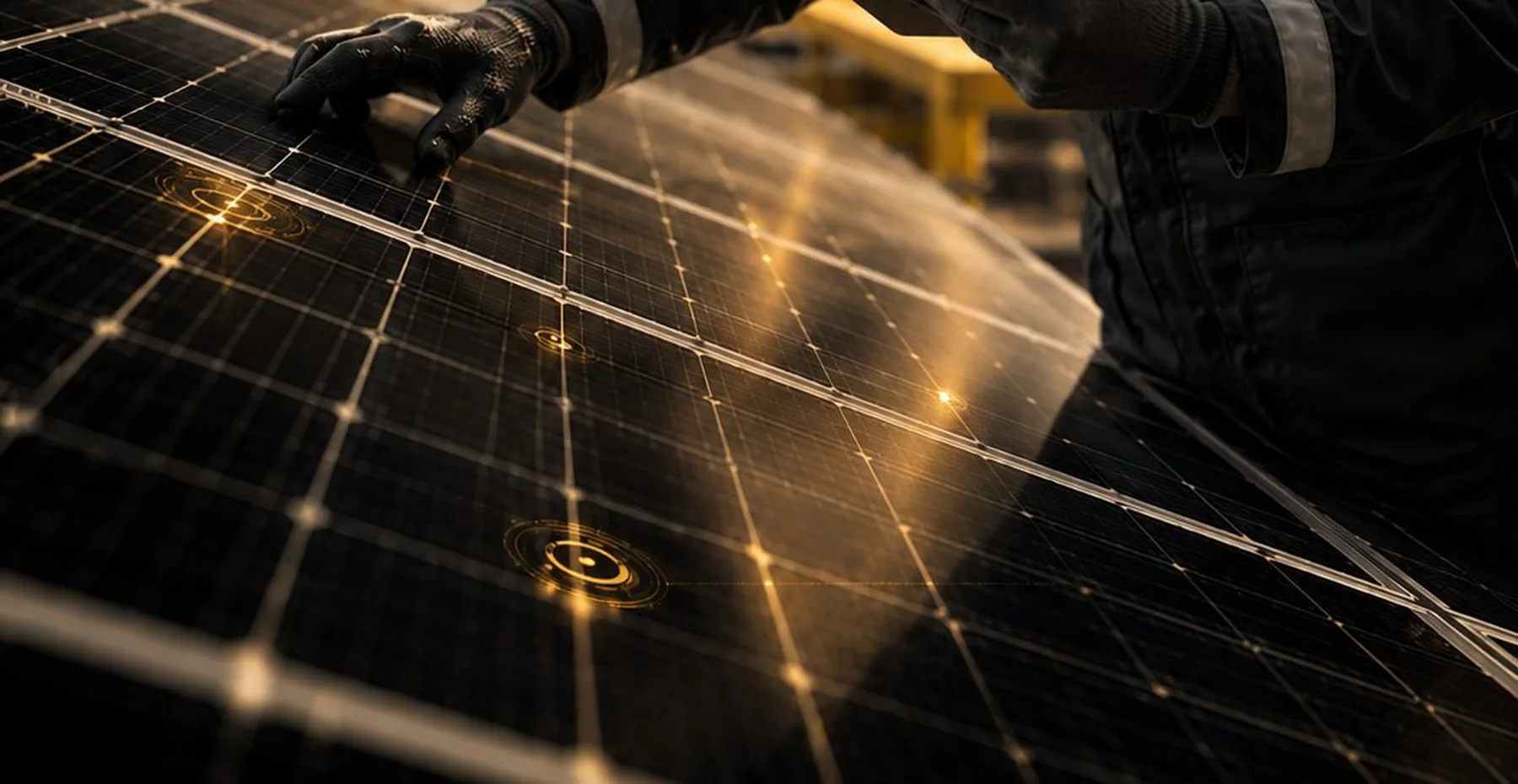
Solar inspector reviewing a photovoltaic panel with a tablet and gold data overlay
On-site inspection at the panel
Questions

Frequently asked.

How quickly can an inspection be arranged?

For most domestic engagements, scoping is completed quickly and on-site work is scheduled around your production or shipment window. International oversight is coordinated with the factory calendar.

Do you use our acceptance criteria or your own?

We work to your specifications, approved quality plan, and AQL criteria wherever they exist, and reference applicable IEC or ISO requirements. Where criteria are missing, we can help define defensible, project-appropriate acceptance standards.

What does a report include?

An executive summary with a clear disposition, risk-classified findings, supporting objective evidence (photos, serials, process data, EL/IV results), and explicit corrective-action and closure requirements, written to make the next decision easier.

Do I still need an inspector if the factory is UL or IEC certified?

Usually, yes. Certification proves a module design passed a test at one point in time. It does not confirm that the specific lot heading to your project was built with the approved materials and process. Independent inspection checks the actual product you are paying for, not the design on paper.

Can you inspect solar modules made in the United States?

Yes. Being US-based is an advantage here. We can reach domestic module lines quickly, coordinate in your time zone, and support the quality and documentation that domestic-content projects increasingly need, without the delays of an overseas-only inspection firm.

Can you cover overseas factories?

Yes. While Sisoko is based in Columbus, Ohio, oversight of overseas manufacturing can be coordinated around the factory's production and shipment schedule so lots are witnessed and released at the right moment.

Are you truly independent?

Yes. Sisoko holds no manufacturer ties and works only for the party commissioning the inspection. Findings are reported objectively, with the evidence attached, so there is no conflict of interest.

Let's map it

Put the right gate on the right risk.

Share your project phase and concern, and we will recommend where to focus surveillance for the best protection per dollar.

Request a Consultation (929) 239-8451
Evidence-first

A report you can hand to procurement, engineering, and the board.

Risk-classified, evidence-backed, and closure-oriented.

Start a project